
Dental Implants vs. Bridges: Which Is Right for You?
When you’re missing teeth, choosing between dental implants vs. bridges isn’t always easy, especially if you don’t know the difference between both.
At DPI Dental, we believe that informed patients are the best patients, and we want to help you figure out which is better for you, dental implants or bridges, with this small guide.
What is a dental implant?
Most people believe a dental implant is a fake tooth that’s fixed into your jaw, but it’s a little more complicated than that. The actual implant is a titanium post attached to your jawbone on which a tooth-shaped crown is placed.
This crown looks, feels, and acts like any of your natural teeth, which means that once it’s on (and you’ve healed), you can treat it like any other tooth. No extra maintenance needed.
Dental Implants Benefits
- Help maintain jawbone density
- Doesn’t rely on surrounding teeth
- Long-lasting, often for 20+ years
- Easy to care for, just like a real tooth
- Natural look and feel
Dental Implant Disadvantages
- Higher upfront cost
- Requires surgery and healing time
- Not ideal if you have advanced bone loss
- Longer treatment timeline
When figuring out what’s better for missing teeth, dental implants vs. bridges, dental implants are often the best choice if you’re missing a single tooth and if your jawbone is strong enough for the surgery.
What’s a Dental Bridge?
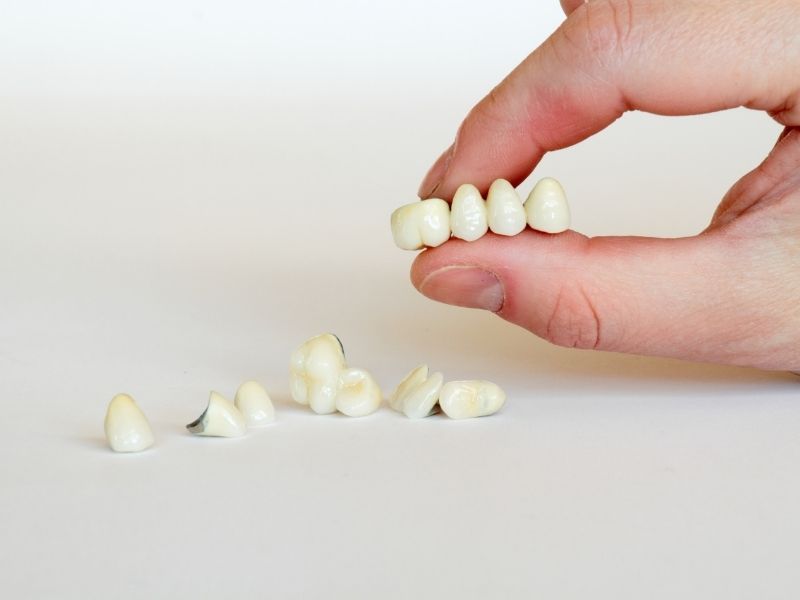
Think of dental bridges as something like fixed partial dentures. They’re not removable like partial dentures are, but they also fill in the space of multiple missing teeth, and they do it without the same kind of surgery dental implants need.
It’s a “best of both worlds” scenario. Healthy teeth are reshaped and turned into “anchor teeths” and your dental bridge is fixed on top of them, covering the empty space between them.
Dental Bridge Benefits
- Faster than implants
- Often more affordable
- No surgery required
- Great for replacing multiple teeth in a row
- Can be done even if bone loss is present
Dental Bridge Disadvantages
- Often require reshaping healthy teeth
- May need replacement after 7–10 years
- Harder to keep clean
- Don’t preserve bone in the missing area
Dental bridges are a more affordable and faster option than dental implants, or the way to go if your jaw doesn’t have the bone density needed for an implant.
Is a Dental Implant Better than a Bridge?
Now that we’ve discussed the pros and cons of dental implants and dental bridges, let’s look at how they truly compare.
Implants are made to last, don’t depend on the teeth around them, and once in place, they help protect your bone structure.
Once healed, they’re also easy to care for and you can floss and brush them like you would any other tooth.
Bridges, on the other hand, don’t need surgery and are usually faster to get. They’re also more affordable and are the ideal choice if your anchor teeth need crowns anyway.
When choosing between dental implants and dental bridges, ask yourself what you want: Do you want the option that will last the longest, even if it takes longer? Or do you need something that works with your current health and money?
What We Recommend
At DPI Dental, we don’t believe in one-size-fits-all treatment. Every smile is different, and when we’re helping our patients choose between dental implants or bridges, we take that into consideration.
Book an appointment today and give us a visit; we’ll guide you through your options and explain what makes the most sense for your mouth.
FAQ's
Can I still get implants if I’ve had missing teeth for years?
In most cases, yes, but we really need to take a look to give you a straight answer. When you come in for your consultation, we’ll take a close look at your bone structure first and work from there.
How long does a fixed dental bridge usually last?
With good care, you can expect anywhere between 10 and 15 years. We’ll show you how to keep it clean, and we’ll make sure to keep an eye on it during your future visits.
What if I’m missing several teeth in a row?
We need to take a look at your teeth to determine what’s the best way to move forward. We might suggest an implant-supported bridge, but we can’t tell without looking.
Do dental implants hurt?
During the procedure, you’ll just feel pressure, no pain. If you’re uneasy about it, we offer sedation and explain the process clearly ahead of time. We’ve helped a lot of nervous patients through this, and many tell us afterward it was easier than expected.
Do bridges or implants need special cleaning?
Implants are cleaned like natural teeth. Bridges need flossing underneath. We’ll show you how to take care of both.